Picture Me: Presenting Queer Visual History
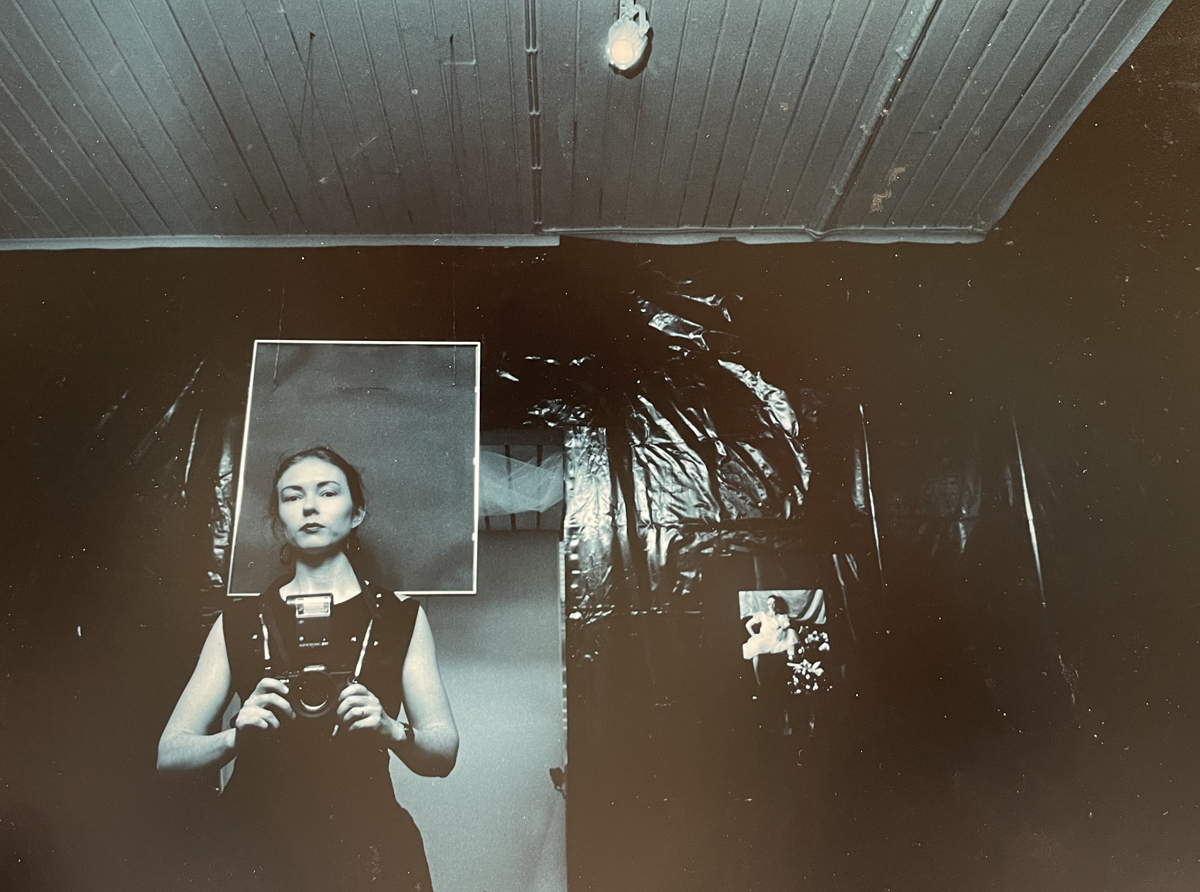
Self-portrait, Auli Kaartinen, 1980s. Courtesy of The Finnish Labour Museum Werstas, Tampere ©
In our project, Picture Me, we engage with a burgeoning interest in queer Finnish history and with scholarship from the German tradition of visual history to consolidate a new research field called queer visual history. Each researcher in the project is working with a particular archival record, or records, associated with Finnish historical figures that are alleged to have lived queer lives.
LGBTQ+ or queer history is stereotypically narrated as “invisible”. Yet, the historian of today nonetheless works in a field where the (queer) sexualities and genders of many individuals, especially those who lived in the twentieth centuries, are well circulated as “open secrets” even if they are not well documented through typical source materials. Even so, traces of queer lives remain in the archive. For historians of gender and sexuality, queerness has typically been found in adoring letters, private diaries or criminal and medical records. We ask: what about the photo record?
Our shared concern is, on the one hand, to test what visual methods can do to enhance our historical analyses and, on the other hand, to embrace the richness of the photographic archive for the ways in which it has been able to capture not just individuals’ stories, but the spaces in which they lived, the people who accompanied them, and even the perspectives with which they viewed their own lives.
Our project’s research questions are tied to these vibrant discussions about queer visual history, as we seek ways of working that exceed formal visual analysis when opening the possibility of queerness relating to historical figures depicted in photo collections and albums.
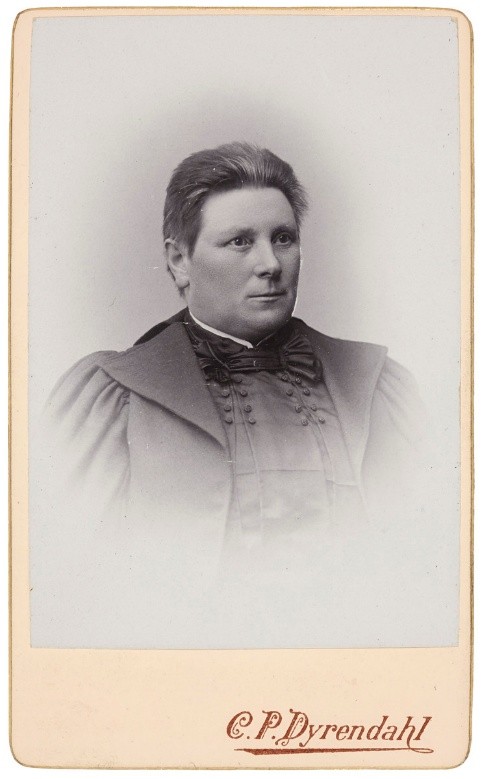
C.P. Dyrendahl: Portrait of Lucina Hagman, undated, early 1900s. Hagman was an early
Finnish feminist and, due to her election in the Finnish parliamentary elections of 1907,
was one of the first female members of parliament in the world.
Courtesy of National Board of Antiquities, Creative Commons, [23.02.2026]
1) What are the repeated visual traces across photographs and photo albums, the analysis of which might suggest a photographer’s or their model’s queerness?
2) What can we learn about queer life by surveying the often intimate, material spaces that contextualise the figures depicted in them?
3) How can affective legacies and queer charges be used to analyse personal photo collections and photo albums?
4) To what extent can experimenting with speculative analysis of photographs work generatively with archival absences in writing queer history?
In our respective sub-projects, we answer these questions by testing and trialling various methods as follows:
DSocSci Tuula Juvonen in her Queer Traces of Early Feminists – Affective-Material Re-Reading of Historic Photographs develops methods to analyse queer traces in photographs of early Finnish feminists by focusing on material details in the images to queer current heteronormative narratives of Finnish gender history.
PhD candidate/PhD Kaisa Tolvanen’s Fragile and Vibrant Lives – Queer Photographs and Assembled Materiality focuses on queer domesticities of female couples from the 1930s-1980s, as portrayed in photographs of their shared homes or summer cottages.
PhD Joe Jukes in their Queer Rural Exposures – Seeing Queer Space and Feeling Queer Time(s) in Finnish Photo Collections maps the rural spaces depicted in Finnish artists’ photo collections and analyses the interrelation of people and places through a method of ‘seeing-feeling’, to centre historical queer and trans lives outside of the metropolis.
DSocSci Olli Kleemola’s Queering Visual History – Mining War-Time Photo Albums analyses a large corpus of photo albums for traces of same-sex intimacy and drag in the Finnish Military in WWII.
Our take on queer visual history moves methodologically between the fields of feminist studies and new materialism: affective reading practices are crucial for our project. We incorporate immaterial, embodied, experiential and speculative ways of engaging photographs as source materials, and as such, we deploy and modify the current analytical tools of visual history in studying the affective vocabulary of historical queerness in vernacular photographs. We draw from existing methods of analysing materiality in historical photographs and add to them perspectives from feminist new materialism while developing new useful methods for queer visual history.
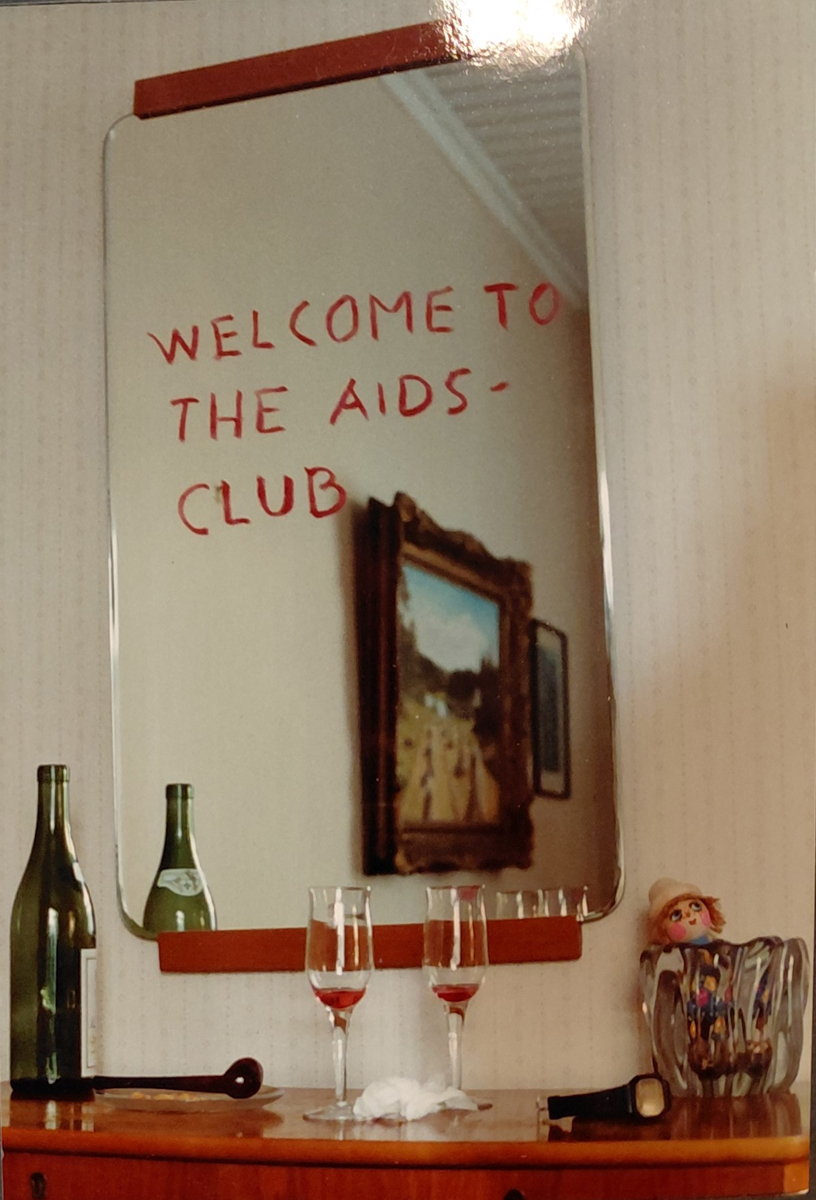
Image by Auli Kaartinen, 1980s. Courtesy of The Finnish Labour Museum Werstas, Tampere ©
By analysing historical photographs, we can produce new empirical knowledge concerning the ways in which early Finnish feminists living in Helsinki fashioned their appearances and social relations based on gender and sexual diversity (Juvonen). Moreover, we look at the role of female same-sex couples’ homes as sites of woman-centred queer lives – and the holidays and travels undertaken to escape their immediate surroundings (Tolvanen). Likewise, we focus on the ways in which lesbians and bachelor men in the countryside creatively fashioned unique, queer ways of living, alone and with others (Jukes), and how same-sex intimacy and drag helped to endure life on the front-line during war (Kleemola). Although we take the photographic images as our starting point, we will also use available personal archives to contextualize our findings. At the same time, we are acutely aware that many gender/sexual non-conforming people purposefully destroyed their incriminating written archives – which highlights why we need to develop skills to study their visual archives, if we are to write national histories that acknowledge their queer presence(s).
For inquiries, collaboration invitations and dissemination opportunities: Project Presenting queer visual history
https://www.tuni.fi/en/research/presenting-queer-visual-history [23.02.2026]
Duration of project: September 2025 to August 2029, Tampere University, Finland
Contact: picme@tuni.fi
Zitation
Joseph Jukes, Picture Me: Presenting Queer Visual History, in: Visual History, 24.02.2026, https://visual-history.de/project/jukes-picture-me-presenting-queer-visual-history/
DOI: https://doi.org/10.14765/zzf.dok-3021
Link zur PDF-Datei
Terms of use for this article:
This text is published under the CC BY-NC-ND 4.0 license. It may be used for non-commercial purposes in unaltered form, provided the author and source are credited. Images and other materials contained in the article are not covered by this license. Detailed information about this license can be found at: https://creativecommons.org/licenses/by-nc-nd/4.0/deed.en